Brisbane

Gold Coast

Sunshine Coast

North Brisbane

Ipswich

Logan

Toowoomba

Hervey Bay

Available 7 days · 7am–7pm

Home / Court we attend /
Brisbane Magistrates Court · 363 George Street

Drink driving lawyer — we're at your court every week

If you’re searching for a drink driving lawyer in Annerley, start here. Our Brisbane office is in Milton, minutes from the CBD courthouse, our lawyers appear at Brisbane Magistrates Court most days of the week — and this page walks you through exactly what your day will look like, and how we make it go well.

Written and reviewed by Steven Brough, founder · practising in Queensland courts for 25+ years · Last updated 6 July 2026

Weekly

appearances at this court since 2010

Milton

our Brisbane office, ~20 min from court

$2,750

fixed fee, drink driving plea
$2,990 with a work licence

Facing Brisbane court? Talk to our local team today — free.

We’ll call you back today — Belinda or Sara will be in touch, 7am–7pm.

4.9 from reviews on Google

The court

Brisbane Magistrates Court

363 George Street, Brisbane QLD 4000 — in the CBD near the corner of George and Turbot Streets. Queensland’s busiest Magistrates Court, with 26 courtrooms across several levels. Registry: 1800 325 085, open 8:30am–4:30pm weekdays.

Our office

Brisbane office — Milton

Milton, minutes from the CBD courthouse. Meet us there, by phone, or at court on the morning. Our lawyers are at Brisbane Magistrates Court most days of the week.

Your lawyer

Steven, Russell or Will

Your matter is run by one of our Brisbane regulars — including founder Steven Brough, Russell and Will. They appear at Brisbane Magistrates Court, and the surrounding courts, every week.
We act for clients across Brisbane CBD, West End, South Brisbane, Fortitude Valley, New Farm, Paddington, Milton and Toowong —and everywhere else in greater Brisbane with a date at this court.

Know before you go

The practical stuff — answered before you have to ask

Everything on this page is specific to Annerley and your matter at Brisbane Magistrates Court. If we act for you, you won’t need to remember any of it — we brief you the day before and meet you at the door.

Where is the court?

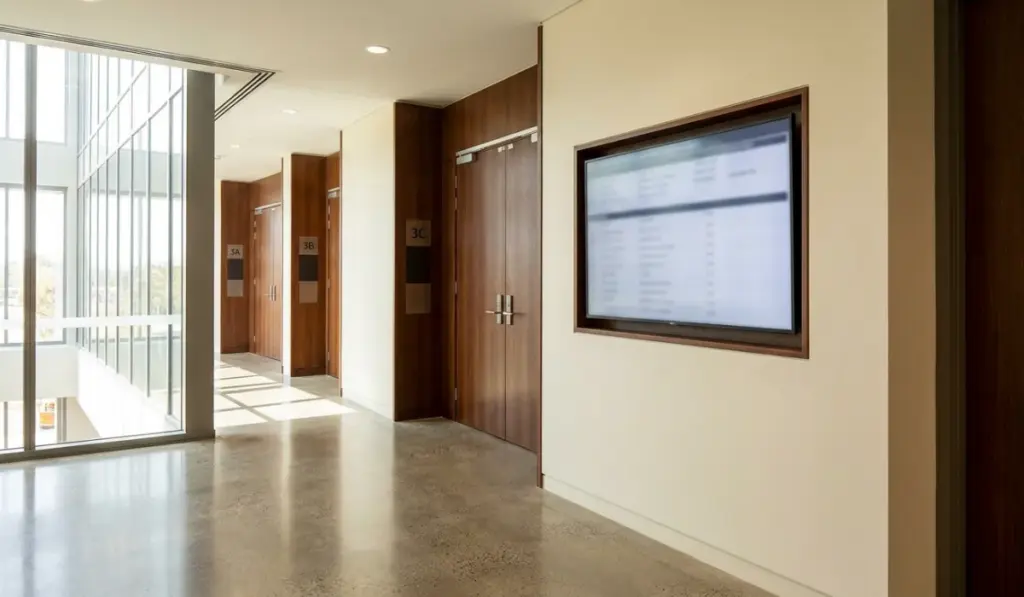
363 George Street, Brisbane — in the CBD near the corner of George and Turbot Streets. It’s Queensland’s busiest Magistrates Court, with 26 courtrooms across several levels; after security an electronic board shows which courtroom your matter is in.

Where do I park?

There is no public parking at the court itself. Use the King George Square car park (Ann Street entrance) or Secure Parking at 40 Tank Street or 300 George Street. Better still, take the train — Roma Street station is about a 5-minute walk and Central about 10.

What time do I need to be there?

Most drink driving matters are listed at 8:30 or 9:00am. Arrive by 8:30am — the security queue takes time, and you need to find your courtroom before the magistrate sits.

What days does the court sit?

Brisbane Magistrates Court sits Monday to Friday, and as Queensland’s busiest court it runs many courtrooms at once. Drink driving matters are listed Monday to Friday — we confirm your courtroom and listing time when we take your matter on.

How do I check my court date?

It’s printed on your Notice to Appear or bail undertaking. Lost it? Ring the registry on 1800 325 085, use the Queensland Courts criminal case lookup  online — or call us and we’ll check it for you the same day.

How do I find my courtroom?

Check the daily law list — published on the Queensland Courts website at 6:45am and updated at 8:45am each court day — or the electronic board past security in the main foyer. Court staff and Friends at Court volunteers can point you the right way.

What is the daily law list?

The court’s running order for the day: every person appearing, their courtroom number and time. Your name appears on it on the day of court only. If we act for you, we text you the courtroom that morning — no searching required.

Is there security at the entrance?

Yes — everyone entering is screened, airport-style. Allow ten minutes, dress neatly (no thongs or singlets), and leave anything sharp at home. Phones are fine, but must be silent inside the courtroom.

Watch first

Exactly what to do on the day

What to wear, when to arrive, where to go, what happens inside — and what to say (nothing; we say it for you). A short walk-through from Steven, with a full transcript if you’d rather read.

So you know exactly what's coming

How our Brisbane drink driving lawyers run your court day

Most drink driving matters at Brisbane are finished in a single morning. You will not be asked to give a speech, and you will not stand alone — we do the talking.

8:30am

Meet your lawyer outside, then through security together

Everything is already prepared — you know the likely outcome and what will be said. We clear the entrance screening and head up to your courtroom together.

9:00am

Court opens — we deal with the prosecutor for you

We’ve already obtained the police brief (the QP9) and your traffic history, checked them for errors, and sorted any last-minute issues before your matter is called.

Mid-
morning

Your matter is called — your lawyer speaks for you

You stand at the bar table beside your lawyer, who addresses the magistrate: your circumstances, your references, your course completion, and why the penalty should sit at the low end. Represented matters are usually called before unrepresented ones.

Minutes
later

The magistrate decides — it's over

Sentencing for a drink driving plea usually takes under fifteen minutes. If you’ve applied for a work licence, it’s typically dealt with at the same time.

Before
lunch

We debrief outside

What the order means, when you can drive again, how to pay the fine, and every date you need in your calendar. Then you go home — it’s done.

Steven Brough  · Founder · Queensland Law Society member · 25+ years in Queensland courts

Steven's approach

Brisbane is where our lawyers appear most.

Steven founded the firm in 2010 and has spent 25+ years in Queensland Magistrates Courts — Brisbane among them, week in and week out. The approach he built runs through every matter our lawyers take on here:start early, do the things magistrates actually give credit for, and have your lawyer put your story properly, in person, to a bench they know.

In your matter that looks like this: your lawyer reads the charge documents and your traffic history, checks how the reading was taken and that the paperwork stacks up, then maps a preparation timeline back from your court date — a QTOP course (we’re a proud sponsor), character references, and medical or counselling material where alcohol is a factor.

And before you spend a cent, we’ll give you an honest read on the realistic outcome for your reading — including whether a work licence is genuinely in reach. If we don’t think we can improve your outcome, we’ll tell you on that first call.

QTOP sponsor

5,000+ matters run

$2,750 fixed fee

Steven on this court

How Brisbane runs, what its magistrates give credit for, and the mistakes unrepresented people make here. Full transcript published with the video.

Court date at Brisbane soon?

Call now — free advice from a lawyer who was in that courtroom this week. Belinda or Sara will pick up, 7am–7pm, 7 days.

4.9 on Google

Diving deeper

Want the full picture on a Annerley drink driving matter?

The short version of everything we brief our clients on before a court date at this court — the ranges, what decides your penalty, the one thing that reliably helps, and the myths worth ignoring.

The three ranges

Low range is 0.05–0.099, mid range 0.10–0.149, high range 0.15 and above. A work licence is only possible under 0.15 — at high range there is none.

What decides your penalty

Your reading, your traffic history, whether there was a crash — and what your lawyer tells the magistrate. Every week between the minimum and the worst case is argued at court, not fixed.

How to reduce it: QTOP

The Queensland Traffic Offenders Program runs over 4 days and shows the court you took the charge seriously before anyone asked — we’re a proud sponsor. Add references, and medical help where relevant. Enrol at qtop.com.au →

Facts & myths

No demerit points apply to a drink driving charge. You can’t plead guilty online. A conviction isn’t automatic — the magistrate has a discretion, and we argue it in every matter where it’s realistic.

Keeping you on the road: the work licence

Under 0.15, held an open licence, weren’t driving for work, and no conviction, disqualification, suspension or cancellation in the last 5 years? You can apply for a work licence — but only before you’re sentenced. It covers work driving only, never personal. Our fixed fee including the application is $2,990.

The mandatory minimums

The minimum disqualification depends on your reading — one month at low range, three at mid range, six at high range — with no upper limit in any band, plus a fine. In Queensland the court cannot decline to disqualify; the only question is how long, and that’s what we argue down.

Your licence until court

Low range: police suspend you 24 hours, then you keep driving until court. Mid or high range: suspended from the day you’re charged right through to court. Caught driving during that suspension? That’s a separate charge — minimum 2-year disqualification.

Can't stop driving before court?

If you’re mid or high range and can’t wait weeks off the road until your court date, a section 79E application — lodged within 21 days of the charge — can get you a temporary licence until your matter is finalised. It needs detailed affidavit material, so move quickly.

You can't drive away from court

The disqualification starts the moment the magistrate imposes it. That means you cannot drive away from the court — not home, not to work. Plan a lift or public transport for the day, because once you’re disqualified, getting behind the wheel is a fresh offence.

Being "in charge" of a vehicle

You can be charged even if you never drove — if you had control of the car, like sitting in the driver’s seat with the keys near you, with no intention of driving. It often catches people waiting to be picked up, looking for something, or sleeping it off. “In charge” carries the idea of being responsible for the car until you hand that responsibility to someone else — and it’s read broadly, though very limited exceptions exist.

Drink driving not on a road

You don’t have to have driven on a road to be charged. The legislation says “on a road or elsewhere” — and “elsewhere” plainly covers private property, car parks and driveways. It doesn’t matter where the car was: your own driveway counts.

Drink driving on P plates

Provisional drivers are on a zero alcohol limit — even a tiny amount in your system results in a charge. P-platers are also exposed to higher disqualifications: a first-time offender faces a minimum 3 months off the road, and can’t apply for a work licence.

Refusing the test

Refusing or failing to provide a breath or blood specimen is treated as a high-range charge — same seriousness, and no work licence available. “Failing” is broader than outright refusal: an insufficient sample can count. There are limited medical defences, backed by a certificate.

The interlock

Mid and high range drivers — and anyone with a second charge in 5 years — must fit an interlock for 12 months once eligible to relicence. The court can’t waive it; it’s a Transport requirement, subject to a few narrow exemptions like remote-location or medical grounds.

Getting your licence back

You don’t just start driving when the disqualification ends. You reapply through Queensland Transport, sit on a probationary licence for a year (zero limit, 4 demerit points), and complete a course — online for first offenders, in person for repeat offenders.

Will it go on my criminal record?

Drink driving is a criminal offence, but a conviction — if one is recorded — goes on your traffic history, not your criminal history, and shows there for 5 years. A police background check won’t see it. But it can still affect overseas travel and transport-industry jobs, which is why we argue against recording one wherever it’s realistic.

General information only, not legal advice. Every matter turns on its own facts — call 1300 952 255 for free, specific advice.
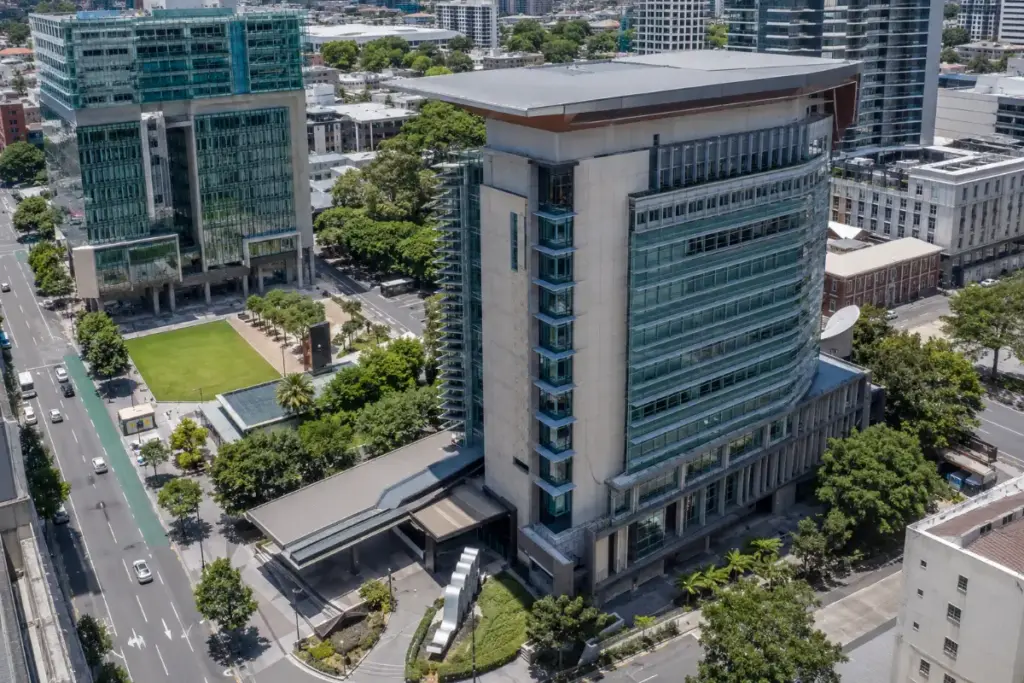
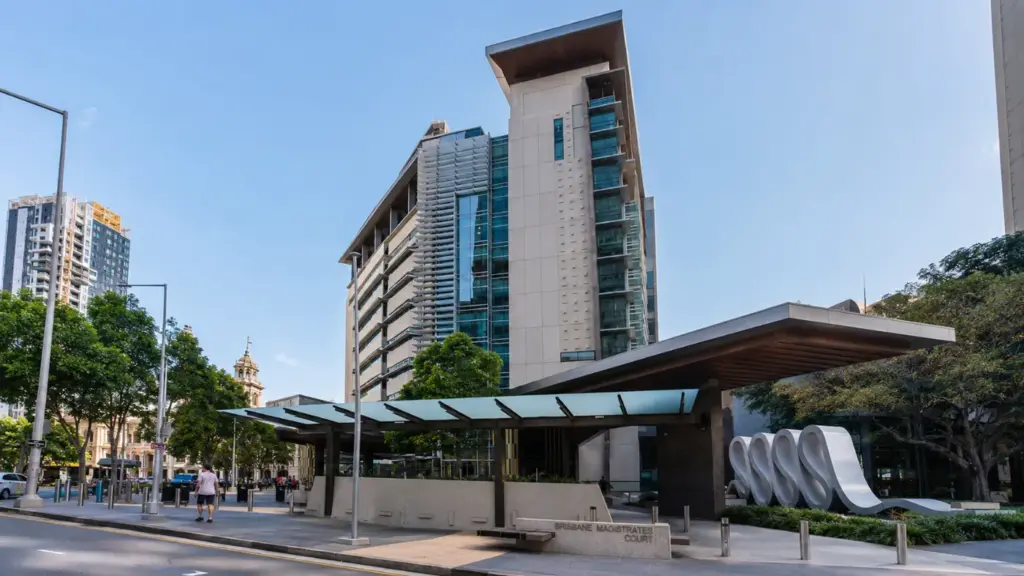
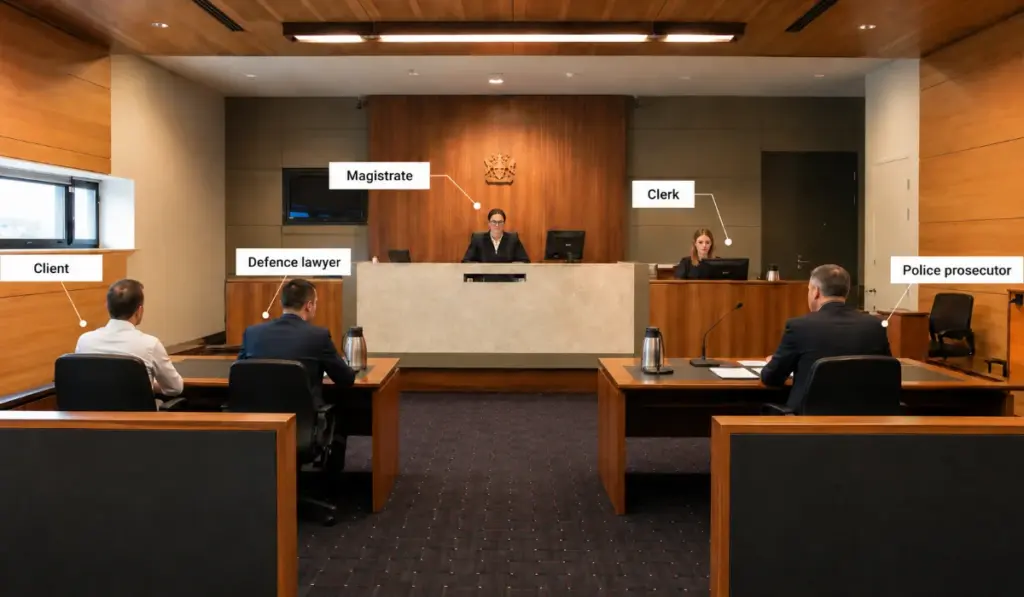
A tour before you arrive

See the court and the walk in — before the day

Knowing what the building looks like takes half the nerves out of the morning. Photography isn’t allowed inside courtrooms, so these are AI illustrations built from public imagery.

1 · The precinct

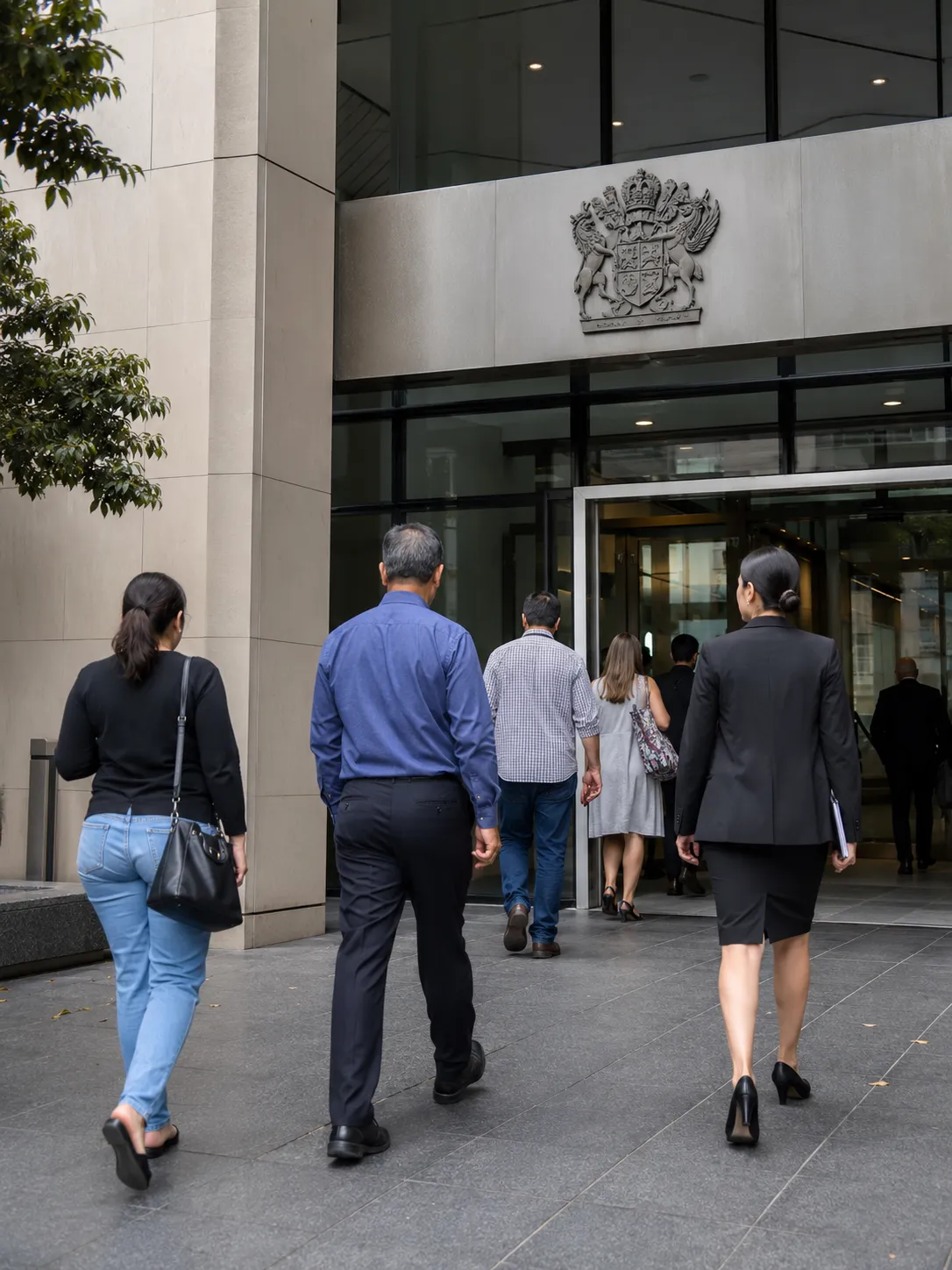
363 George Street sits in the Brisbane CBD, a short walk from Roma Street and Central stations and the King George Square busway.

2 · The building

One secured entrance for everyone, with airport-style screening. There’s no public parking at the court — take the train or use a nearby paid car park.

3 · The court room

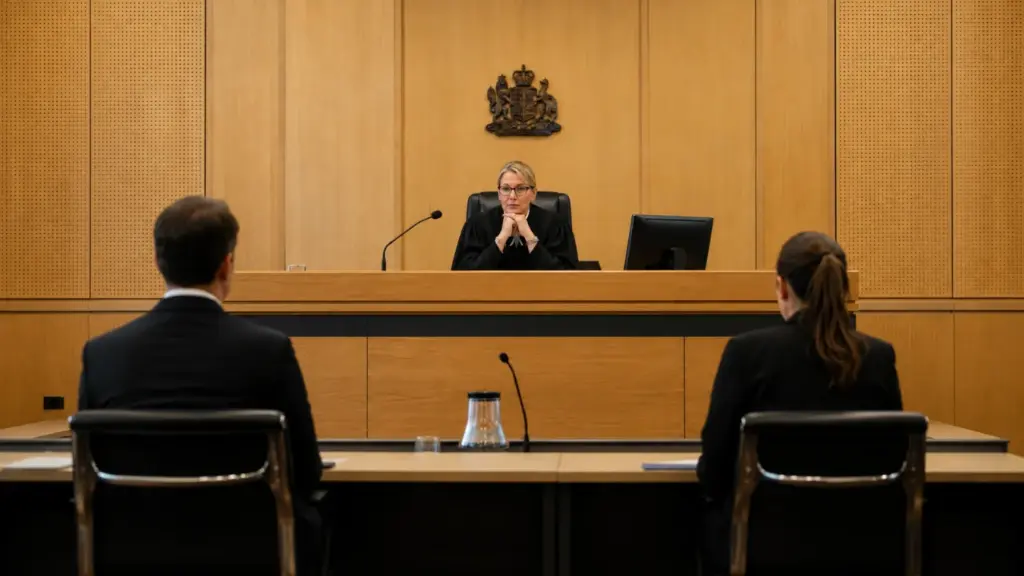
Client and lawyer at one table, police prosecutor at the other, magistrate and clerk at the bench. We stand right beside you the whole time.

Getting there

Address

363 George Street, Brisbane 4000

Registry phone

Registry hours
8:30am–4:30pm, Mon–Fri

Parking

King George Square / Secure Parking (paid)
Bus
Roma St & Central stations, short walk
From our office
Milton, minutes away
Court days are busy — if you’re driving yourself, arrive by 8:15am to clear security by 8:30am.

Who you'll stand before

The magistrates — and how your matter moves through this court

Several magistrates sit at Richlands, allocated to courtrooms day by day — you can’t choose who hears your matter, and neither can we. What we can do is know them: our lawyers appear before Brisbane’s magistrates every week, and we know what each gives credit for and what they expect to hear. Current magistrates — Queensland Courts →

An independent police prosecutor — not your arresting officer — runs the case against you.

We deal with them directly: obtaining the QP9 brief, checking the facts, and resolving issues before your matter is called.

01

Your first court date is a "mention"

A short administrative appearance. The prosecutor hands over the QP9 — the police version of events, with your breath analyst certificate and traffic history attached. Nothing is decided unless you choose to plead that day.

02

You have three options

Plead guilty and be sentenced (only wise if you’re fully prepared), adjourn to get advice and preparation time — the most common first step — or plead not guilty, and the court orders a brief of evidence and sets a hearing date.

03

Pleading guilty? Sentencing is usually the same morning

The prosecutor reads the facts, hands up your history, and then it’s your side’s turn — your lawyer puts your circumstances, your references and your course completion to the magistrate, and asks for the penalty to sit at the low end.

04

Pleading not guilty? The matter is adjourned for a hearing

The prosecution must disclose its evidence, and a hearing date is set — usually some months away. We’ll give you an honest view of your prospects before you commit to that path.

05

After it's decided

The order takes effect immediately: disqualification dates, fine (payable through SPER on a plan if needed), and any licence steps. We walk you through all of it outside — and if the outcome is genuinely wrong, an appeal to the District Court must be filed within 28 days.

The law behind all of this: Transport Operations (Road Use Management) Act 1995 — s 79 (drink driving offences) and s 87 (restricted licences).

First time in any court?

The terms you'll hear, in plain English

Notice to Appear

The document police gave you — it states your charge, your court and your date.

QP9

The police prosecutor’s brief: their version of the facts, your reading certificate and your history.

Mention

A short procedural appearance — your first court date is one. Nothing final has to happen.

Adjournment

Moving your matter to a later date — routinely granted once, to get advice or prepare.

Bar table

The long table facing the magistrate. Prosecutor on one side, you and your lawyer on the other.

Duty lawyer

A free court lawyer for people at risk of jail — generally not available for drink driving matters.

Conviction recorded / not recorded

The court can decide not to record a conviction — it still counts as a penalty, but doesn’t show on standard checks.

Disqualification

The period you cannot drive, set by the magistrate. It starts the moment you’re sentenced.

SPER

The state agency that collects court fines — payment plans are available, so the fine never has to be paid on the day.

Questions at 2am?

Ask our assistant about your Brisbane court date — any time.

Instant answers on parking, arrival times, what happens on the day, and work licences at this court — trained on our Richlands guides. For advice on your situation, it hands you straight to a human.

Frequently asked questions

The questions everyone asks about Brisbane court — answered straight

These are the questions clients ask us most before a Richlands court date. Anything else — the call is free: 1300 952 255.

Can I bring support people — or my kids?
Support people, absolutely — court is open to the public and a familiar face in the gallery helps. Kids are allowed, but mornings run long and other matters can be confronting; if you can leave them with someone, do.
Court is open, and a formal record exists — but nobody is notified. Employers and insurers only learn of it through checks you authorise, and a standard police check shows recorded convictions only. That’s why arguing against a recorded conviction matters.
Your court morning: usually done before lunch, with your matter itself taking 10–15 minutes. Start to finish, most matters run 3–6 weeks from charge to sentence — enough time to complete QTOP and gather references, which is exactly how we use it.
Preparation kills most of it. Before the day you’ll know the realistic outcome, where to stand, and that your lawyer does all the talking. Arrive early, bring a support person, eat breakfast. The dread of court is almost always worse than court.
Yes — dozens of matters share the morning list, and the gallery watches each one. The upside: represented matters are usually called first, so with a lawyer you’re generally in and out sooner.
The opposite. Magistrates see representation as taking the charge seriously — and a lawyer gets your story across in the few minutes that decide months of your licence. Nobody at the bar table thinks you look guilty for being prepared.
Will my case be reported or posted online?
Your name appears on the court’s daily law list on the day, then it comes down. Routine drink driving matters at Richlands almost never attract media, and the court doesn’t publish outcomes online.
Not automatically. For traffic offences the magistrate has a discretion, weighing your age, history and the impact on your job and travel. We argue it in every matter where it’s realistic — it’s often the most valuable thing won on the day.
An adjournment at your first mention is routine — magistrates expect people to get advice and prepare. We can usually appear and have it adjourned 3–4 weeks without you saying a word.
Usually yes, if you’re pleading guilty — a matter can be transferred to a Magistrates Court closer to home or work. We arrange it through the registry. If you live in Brisbane’s south-west but were charged elsewhere, the same works in reverse.

You can appeal to the District Court, but it must be filed within 28 days of sentence. Call us immediately — and if we ran your plea, we’ll tell you honestly whether an appeal has legs.

If you were sentenced, it’s done — we confirm your disqualification dates, fine arrangements and licence steps in writing. If it was adjourned, you leave with a preparation plan and a new date. Either way, nothing is left vague.

What we actually do

How we shorten your disqualification — and protect your licence

The minimum disqualification depends on your reading — one month at low range, three months at mid range, six months at high range — and in every case the maximum is much higher. Everything below is aimed at one thing: landing you as close to that floor as your matter allows — and, where your reading is under 0.15, keeping you on the road with a work licence.

We get the full picture

Your story first: job, family, why the licence matters — and anything that explains (without excusing) that night. It all ends up in front of the Brisbane magistrate.

01

We get the brief from the prosecutor

We obtain the police brief — the QP9 and the analyst’s certificate — and check the facts and how the reading was taken before you plead to anything. If something is wrong, we find it here.

02

You do the smart things early

A QTOP course — it runs over 4 days, and we’re a proud sponsor — plus character references, and medical or counselling help where alcohol is a factor. We tell you exactly what to get, and when.

QTOP · 4 days

03

We work out your work-licence position

If your reading is under 0.15, you hold an open licence and you’ve been disqualification-free for 5 years, a work licence can keep you driving for work. It must be applied for before you are sentenced, so we sort it early — total fixed fee including the application is $2,990.

Keep driving

04

We tailor every word to your result

What we say to the magistrate is built around you — your reading, your history, your need to drive — and aimed squarely at the best realistic outcome: the shortest disqualification, the lowest fine, and the conviction question argued.

05

Your lawyer speaks for you — and you leave with a plan

You won’t have to find the words: your lawyer puts your story to the bench, in person. Then reinstatement dates, interlock steps where they apply, and what to do while off the road — in writing, before we say goodbye outside the court.

06

All of it included in the $2,750 fixed fee ($2,990 with a work licence application) — quoted in writing before you commit.

Work licence applications at Brisbane

If your reading was under 0.15 and you hold an open licence, you may be able to keep driving for work — but a work licence must be applied for before you're sentenced. Once you plead, the door closes. It's the single most common thing people lose by turning up unrepresented. Check yourself in 20 seconds:
1. Was your reading under 0.15?
2. Do you hold an open licence (not P or L plates)?
3. No suspensions or disqualifications in the last 5 years?

Drink driving penalties at Richlands Magistrates Court

Low range (0.05–0.099)

Fine + 1–9 mth disqualification

Mid range (0.10–0.149)

Fine + 3–12 mth disqualification

High range (0.15+)
6 mth minimum, no upper limit — no work licence

Our fixed fee

$2,750 · $2,990 with work licence

Ranges are indicative — high range disqualifications typically run up to 20 months where the reading is very high or an accident occurred. We’ll give you a specific, honest estimate on the phone. More on high range →

Belinda Smyth · Director & Client Services Manager · 24 years in the legal industry — she and Sara take your calls

How we operate

What happens when you contact us

No scripts. No sales pitch. No chasing or hounding. At worst, you hang up knowing more about your charge than when you called.

01

Belinda or Sara takes your call

Our client services team answer every call themselves — no call centre, no scripts. Immediate answers at no cost, and your details go straight to a lawyer. Court tomorrow? Say so — we take urgent matters.

02

A fixed quote lands in your inbox the same day

With extra information relevant to your charge — so you understand your matter whether you engage us or not. $2,750 for a drink driving plea, $2,990 including a work licence application.

03

We meet you at the Brisbane courthouse door

Everything prepared, the plan set the day before, and your lawyer beside you from security to the bar table. You never stand alone.

Diving deeper

What's different about Brisbane Magistrates Court

Sitting days & the list

The court sits Monday to Friday, with traffic lists called from 9am across multiple courtrooms on several levels — the daily law list in the foyer (and online) tells you your courtroom that morning. Represented matters are generally called ahead of unrepresented ones, and duty lists here move fast.

Getting there on the day

There is no public parking at the courthouse itself — use King George Square or Brisbane Square car parks, or take the train to Roma Street or Central, both a short walk to 363 George Street. Allow a solid 15 minutes for the security queue on a Monday morning.

Who this court serves

This court draws matters from the whole inner city — the CBD, Fortitude Valley, South Brisbane, West End, New Farm, Paddington, Toowong, Coorparoo and everywhere between the bayside and western suburbs not served by a suburban court.

Keeping you on the road: the work licence

Under 0.15, held an open licence, weren’t driving for work, and no conviction, disqualification, suspension or cancellation in the last 5 years? You can apply for a work licence — but only before you’re sentenced. It covers work driving only, never personal. Our fixed fee including the application is $2,990.

The mandatory minimums

The minimum disqualification depends on your reading — one month at low range, three at mid range, six at high range — with no upper limit in any band, plus a fine. In Queensland the court cannot decline to disqualify; the only question is how long, and that’s what we argue down.

Your licence until court

Low range: police suspend you 24 hours, then you keep driving until court. Mid or high range: suspended from the day you’re charged right through to court. Caught driving during that suspension? That’s a separate charge — minimum 2-year disqualification.

Can't stop driving before court?

If you’re mid or high range and can’t wait weeks off the road until your court date, a section 79E application — lodged within 21 days of the charge — can get you a temporary licence until your matter is finalised. It needs detailed affidavit material, so move quickly.

You can't drive away from court

The disqualification starts the moment the magistrate imposes it. That means you cannot drive away from the court — not home, not to work. Plan a lift or public transport for the day, because once you’re disqualified, getting behind the wheel is a fresh offence.

Being "in charge" of a vehicle

You can be charged even if you never drove — if you had control of the car, like sitting in the driver’s seat with the keys near you, with no intention of driving. It often catches people waiting to be picked up, looking for something, or sleeping it off. “In charge” carries the idea of being responsible for the car until you hand that responsibility to someone else — and it’s read broadly, though very limited exceptions exist.

Drink driving not on a road

You don’t have to have driven on a road to be charged. The legislation says “on a road or elsewhere” — and “elsewhere” plainly covers private property, car parks and driveways. It doesn’t matter where the car was: your own driveway counts.

Drink driving on P plates

Provisional drivers are on a zero alcohol limit — even a tiny amount in your system results in a charge. P-platers are also exposed to higher disqualifications: a first-time offender faces a minimum 3 months off the road, and can’t apply for a work licence.

Refusing the test

Refusing or failing to provide a breath or blood specimen is treated as a high-range charge — same seriousness, and no work licence available. “Failing” is broader than outright refusal: an insufficient sample can count. There are limited medical defences, backed by a certificate.

The interlock

Mid and high range drivers — and anyone with a second charge in 5 years — must fit an interlock for 12 months once eligible to relicence. The court can’t waive it; it’s a Transport requirement, subject to a few narrow exemptions like remote-location or medical grounds.

Getting your licence back

You don’t just start driving when the disqualification ends. You reapply through Queensland Transport, sit on a probationary licence for a year (zero limit, 4 demerit points), and complete a course — online for first offenders, in person for repeat offenders.

Will it go on my criminal record?

Drink driving is a criminal offence, but a conviction — if one is recorded — goes on your traffic history, not your criminal history, and shows there for 5 years. A police background check won’t see it. But it can still affect overseas travel and transport-industry jobs, which is why we argue against recording one wherever it’s realistic.

General information only, not legal advice. Every matter turns on its own facts — call 1300 952 255 for free, specific advice.
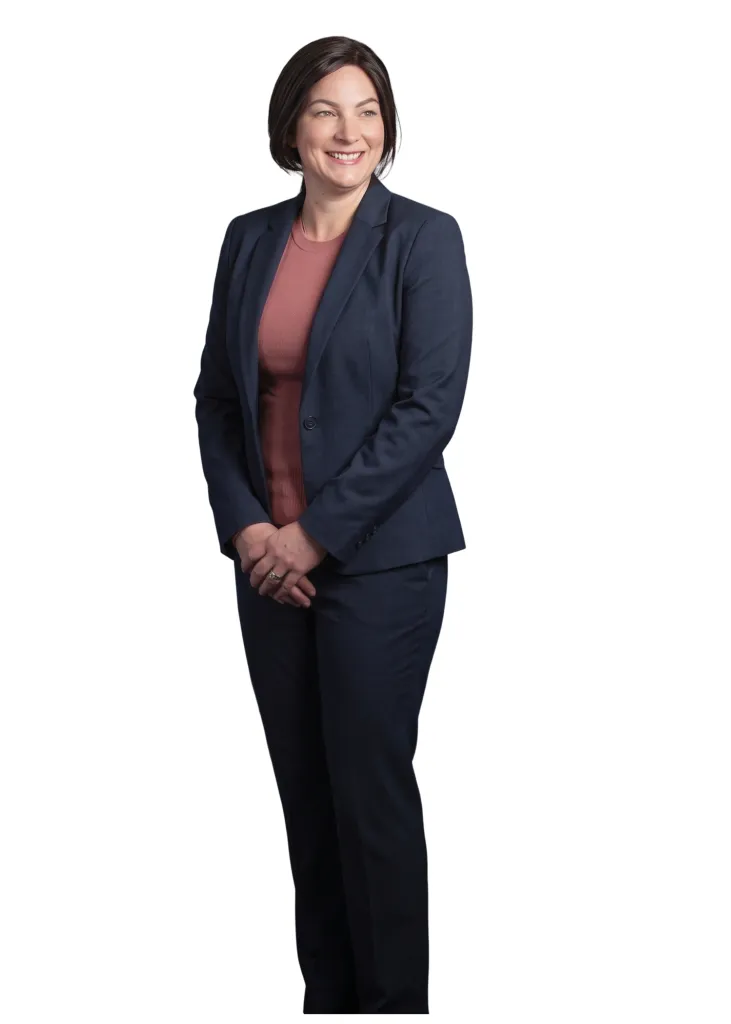
our team

The lawyers who'll stand beside you

Every matter is run by a lawyer who appears in these courts constantly — the person you speak to is the person at the bar table.

One bad night doesn't have to cost you everything.

Free advice · 7 days, 7am–7pm

From our clients

Annerley drivers we've stood beside.

4.9  on Google

“Definitely recommended Russell and Belinda.. Russell couldn’t of helped my partner anymore best outcome 100 percent recommend and so very grateful for Russell .”
Lisa Renwick — Google review
“Friendly, positive and helpful. Clarity Law represented me in a professional manner and had my best interests at heart. They were able to get me the best possible outcome. Highly recommend this company.”
Gem Wolf — Google review
“I had Jacob Pruden deal with my assault matter, I can’t recommend Jacob highly enough! He was thoroughly prepared and professional. Jacob presence put me at ease in this stressful situation. 100% recommend!”
Scott Larfield — Google review
“I appreciated having Russell appear for me in court in regards to my DUI charge. He was very professional and made attending court a lot less stressful. Clarity Law also charged a lot less than other businesses.”
Jason Sproule — Google review
“Very professional and prompt service. The outcome of was as good as it gets, very happy.”
Jeremy Cosgrove — Google review
“Jacob and Belinda at Clarity Law were amazing. They were very sympathetic and understanding of my situation. They did their best to put my mind at rest and worked well to get a positive outcome. I love Clarity Law’s website as well, it is informative and states the fixed cost prices. I don’t want to need a lawyer again but, if I did I would be calling Clarity Law.”
donna burton — Google review

From our blog

Related reading for your Annerley drink driving charge