Brisbane

Gold Coast

Sunshine Coast

North Brisbane

Ipswich

Logan

Toowoomba

Hervey Bay

Available 7 days · 7am–7pm

Home / Traffic Services

Dangerous driving in Brisbane is a — never face it alone

Dangerous operation of a motor vehicle is one of the most serious offences on the road in Queensland. It’s a criminal offence, not just a traffic one — prison is a real possibility, there’s no work licence, and a conviction can follow you for years. Charged in the Scenic Rim? Your matter is heard at Beaudesert Magistrates Court, cnr William & Anna Streets. Here’s the honest picture, and exactly what we do about it.

Written and reviewed by Steven Brough, founder · practising in Queensland courts for 25+ years · Last updated 8 July 2026

Criminal

offence — prison is possible

6–12 mths

minimum disqualification

Brisbane

heard at 363 George Street

Charged, or already have a court date? Talk to our team today — free.

We’ll call you back in around 15 minutes during business hours.

✓ Confidential ✓ No obligation ✓ 7am–7pm

4.9 from reviews on Google

Your court

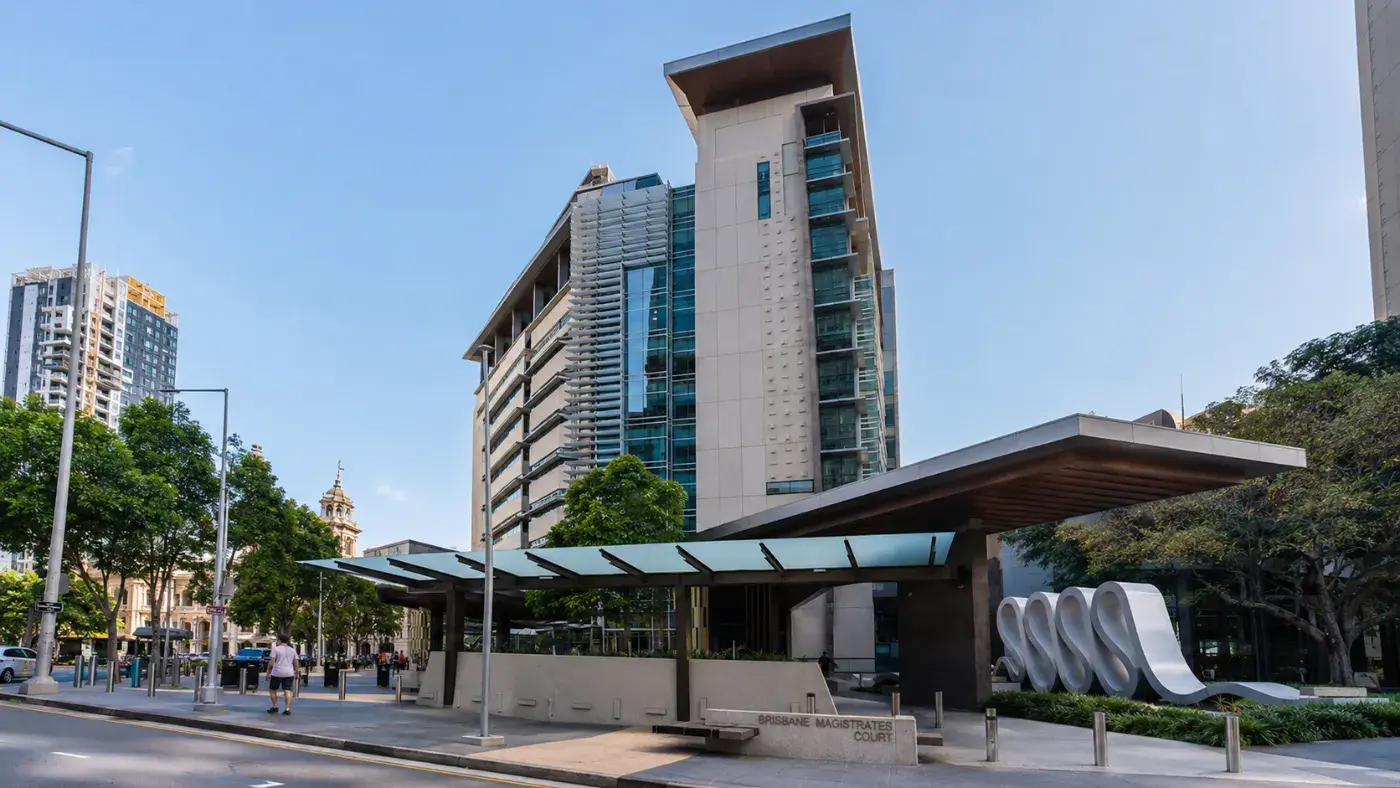
Brisbane Magistrates Court

363 George Street, Brisbane QLD 4000. Dangerous driving charges for inner Brisbane start here; the most serious (causing death or GBH) are committed to the District Court. The registry is open 8:30am–4:30pm weekdays.

Our office

Level 1, 16 McDougall St, Milton

Minutes from the city courts. Meet us here, by phone, or at court on the morning. Phone (07) 3067 7017.

Your lawyer

Russell, Will or Sarah

Your matter is run start to finish by one of our Brisbane regulars — Russell, Will or Sarah. The lawyer you speak to is the one who appears beside you.

The honest picture

What a dangerous driving charge in Queensland actually means

Dangerous driving is defined in section 328A of the Criminal Code — not the traffic legislation — and that changes everything about how seriously the court treats it. Six things are worth knowing before your court date:

1

It's a criminal offence, not just a traffic one

Dangerous driving is charged under the Criminal Code. A conviction can affect overseas travel, employment and insurance in a way an ordinary traffic fine never would.

2

There are four charges, and they escalate fast

Basic dangerous driving, dangerous driving while affected by an intoxicating substance, excessive speeding or unlawful racing, and — the most serious — causing death or grievous bodily harm. The one you face decides your court and your exposure.

3

Prison is a real possibility — even first time

Depending on the circumstances and the harm done, a first offence can attract actual imprisonment. Where death or grievous bodily harm is caused, a prison sentence is almost always imposed.

4

No work licence — the disqualification is absolute

Unlike drink or drug driving, there is no work or hardship licence for dangerous driving. The minimum is 6 months (1 year for death or GBH) with no upper limit — so minimising it is everything.

5

You have the right to silence — use it

Section 397 of the Police Powers Act protects your right to say nothing. In most cases you should never give a formal police interview before getting legal advice. Talking rarely helps — it often brings harsher charges.

6

The charge can often be negotiated down

A dangerous driving charge can sometimes be negotiated down to careless driving — which carries no mandatory disqualification. Getting the right lawyer in early is often what makes that possible.

Penalties at a glance

Dangerous driving (basic)

Up to 3 years prison

Misdemeanour · max 200 penalty units (≈$34,540) · min 6 months disqualification , no upper limit · Magistrates Court · no work licence..

Causing death or GBH / aggravated

Up to 14 years prison

District Court · min 1 year disqualification , no upper limit · prison almost always imposed · intoxicated / speeding / racing forms carry up to 5 years.
Careless driving is also a type 1 hooning offence — a vehicle can be impounded for 90 days. A penalty unit is currently $172.70. Whichever version you face, the first phone call is free.

Pulled over, or charged after a crash? What you do next matters most.

Check in 30 seconds

How serious is the charge you're facing?

There are four dangerous driving charges in Queensland, and they carry very different consequences. Pick the one on your Notice to Appear to see the maximum penalty, the minimum disqualification, and which court will hear it.

There is no work licence for any of them.

Which is why getting the charge negotiated down, or the disqualification minimised, is the whole game — and why you shouldn’t face it without an experienced lawyer.
General guidance only, not legal advice. Confirm your situation with a lawyer on 1300 952 255, free.

Which charge are you facing?

Maximum penalty

3 years imprisonment

Minimum disqualification

6 months

Which court

Magistrates Court

Work licence

Not available

Basic dangerous driving is a misdemeanour — maximum 200 penalty units (about $34,540) or 3 years imprisonment. The disqualification has no upper limit, and prison is possible depending on the circumstances. Negotiating the charge down to careless driving, which carries no disqualification, is often achievable.

This is a charge you should never face without an experienced traffic lawyer — call  1300 952 255   before your court date, free.

Maximum penalty

5 years imprisonment

Minimum disqualification

6 months

Which court

Magistrates Court

Work licence

Not available

Because you were adversely affected by an intoxicating substance, this is charged as a crime — maximum 400 penalty units (about $69,080 ) or 5 years imprisonment. Even low-range alcohol can qualify. Being affected pushes the penalty up, so how this is argued really matters.

This is a charge you should never face without an experienced traffic lawyer — call 1300 952 255 before your court date, free.

Maximum penalty

5 years imprisonment

Minimum disqualification

6 months

Which court

Magistrates Court

Work licence

Not available

Excessive speeding (40km/h+ over) or taking part in an unlawful race makes this a crime — maximum 400 penalty units (about $69,080 ) or 5 years imprisonment. It’s also a type 1 hooning offence, so your vehicle can be impounded for 90 days.

This is a charge you should never face without an experienced traffic lawyer — call  1300 952 255   before your court date, free.

Maximum penalty

Up to 14 years imprisonment

Minimum disqualification

1 year

Which court

District Court

Work licence

Not available

Dangerous driving causing death or grievous bodily harm is the most serious form and is finalised in the District Court. Where an aggravating circumstance applies the maximum is 14 years. A prison sentence is almost always imposed — experienced representation is critical from day one.

This is a charge you should never face without an experienced traffic lawyer — call  1300 952 255   before your court date, free.

What we actually do

How we keep you out of prison and on the road

The shortest disqualification, no conviction recorded, the charge negotiated down, and — where prison is on the table — keeping you out of it. Everything below is aimed at that.

We protect your right to silence first

Before anything else — don’t give a police interview until you’ve spoken to us. What you say (or don’t) in the first 48 hours can decide whether you’re charged at all, and with what.

01

We get the brief and look for defences

We obtain the QP9, the forensic crash report and your traffic history — then test the case: was the driving actually dangerous, a sudden mechanical or medical failure, wrong driver, or an emergency? If there’s a defence, we find it.

02

We negotiate with the prosecutor

This is where cases are won. We push to have the charge reduced to careless driving (no mandatory disqualification), the facts made more favourable, or — where the case is weak — the charge withdrawn entirely.

Charge down

03

We build your mitigation early

A QTOP course — it runs over 4 days, and we’re a proud sponsor — a defensive driving course, character references and, where appropriate, an apology to the victim. These are exactly what the court gives credit for.

Keep driving

04

We tailor every word to your result

What we put to the magistrate or judge is built around you — your circumstances, whether it was momentary inattention, your remorse and rehabilitation — and aimed squarely at avoiding prison and keeping the conviction and disqualification to the minimum.

05

Your lawyer stands and speaks for you

In most cases you won’t have to say a word. Your matter is heard early, your lawyer puts your case, and you leave knowing your outcome and next steps — not guessing.

06

Fixed fee, quoted in writing upfront — no hidden charges, and the money stays in trust until you authorise it.

Steven Brough  · Founder · Queensland Law Society member · 25+ years in Queensland courts

Steven's approach

On a charge this serious, experience is everything.

Steven founded the firm in 2010 and has spent 25+ years in Queensland courts. Dangerous driving is where that experience matters most — because the difference between a suspended sentence and actual prison, or between a dangerous charge and a careless one with no disqualification, comes down to who is putting your case, and how early they start.

His method: protect your right to silence, get the brief and test it hard for defences, negotiate with the prosecutor to reduce or withdraw the charge, and build genuine mitigation — QTOP (we're a proud sponsor), a defensive driving course, references, an apology — then have your lawyer put your story properly, in person, to the magistrate or judge.

We've kept clients out of prison who arrived certain they were going, and had dangerous charges dropped to careless with no licence loss at all. And before you spend a cent, we'll tell you the honest, realistic range for your case.

QTOP sponsor

5,000+ matters run

Fixed fee, quoted upfront

2 minutes — work licences and what happens at court, straight from Steven

Diving deeper

Want the full picture on dangerous driving?

Steven has written a complete guide to dangerous driving in Queensland — the four charges, the defences, the leading cases, and how sentencing really works. Here’s the short version.

Careless vs dangerous

Dangerous driving subjects the public to risk over and above ordinary driving. Careless driving is less serious and carries no mandatory disqualification — which is why negotiating down matters so much.

Momentary inattention

Not a defence — even a split-second lapse can be dangerous driving. But it’s a major factor in sentencing: in R v Gruenert, momentary inattention meant no actual prison despite a death.

Real defences

A sudden, unknown mechanical defect; a sudden medical event; an extraordinary emergency; or wrong-driver identity. Rare, but where they exist we find and run them.

Facts & myths

No demerit points — a disqualification instead. No work licence. “I didn’t mean to” isn’t a defence. And getting a lawyer doesn’t make you look guilty — it shows the court you’re taking it seriously.

The four charges and the law

Dangerous operation of a vehicle is charged under section 328A of the Criminal Code — not the traffic legislation. There are four forms: basic dangerous driving (up to 3 years); dangerous driving while adversely affected by an intoxicating substance, or at excessive speed, or in a race (up to 5 years); and — the most serious — causing death or grievous bodily harm (up to 14 years, finalised in the District Court). The test is whether the driving subjected the public to a risk over and above that ordinarily associated with driving.

What decides your sentence

The court weighs the manner of driving, the harm done, your traffic and criminal history, and your remorse and rehabilitation. There is no work or hardship licence — the minimum disqualification is 6 months (1 year for death or GBH) with no upper limit, so minimising it is everything. Prison is possible even on a first offence, and almost always imposed where death or grievous bodily harm results.

The careless-driving downgrade

The single most valuable outcome in many matters is negotiating the charge down to careless driving, which carries no mandatory disqualification. We push the prosecutor on the facts, on the charge itself, and — where the case is weak — for withdrawal. Getting an experienced lawyer in early is often what makes a downgrade possible.

Defences and leading cases

Genuine defences include a sudden, unknown mechanical defect, a sudden medical event, an extraordinary emergency, or wrong-driver identity. Momentary inattention is not a defence — but it matters greatly at sentence: in R v Gruenert momentary inattention meant no actual prison despite a death. You also have the right to silence under section 397 of the Police Powers Act — use it before giving any interview.

General information only, not legal advice. Every matter turns on its own facts — call 1300 952 255 for free, specific advice.

Your local court

Brisbane Magistrates Court — where your charge is heard

Dangerous driving charges for inner Brisbane start at Brisbane Magistrates Court, 363 George Street. Less serious matters are dealt with here; dangerous driving causing death or grievous bodily harm is committed up to the District Court. Either way, our lawyers appear before this bench regularly and know what a Brisbane magistrate wants to see.

Where it is

363 George Street in the CBD — 26 courtrooms across several levels; an electronic board shows which one you’re in.

Parking & getting there

There’s no public parking at the court — take the train to Roma Street or Central station, both a short walk away. Allow time to clear security screening at the entrance.

When it sits & what to expect

Brisbane Magistrates Court sits Monday to Friday and runs many courtrooms — aim to arrive by 8:30am, check the board for your courtroom, and your lawyer will meet you, speak to the police prosecutor, and appear beside you.
Brisbane Magistrates Court, 363 George Street, Brisbane

Frequently asked questions

Asked at 2am, answered here

These are the questions clients ask us most in the first phone call. Anything else — the call is free: 1300 952 255.
Can I get a work licence or hardship licence for dangerous driving?
No. It’s not possible to get a work or hardship licence for dangerous driving, so it’s critical to minimise the disqualification as much as possible. The minimum is 6 months for basic dangerous driving and 1 year where death or grievous bodily harm is caused — both with no upper limit.
Prison is a real possibility, even on a first offence — it depends on the circumstances, the damage done and whether anyone was hurt. Where the charge is causing death or grievous bodily harm, a prison sentence is almost always imposed. We’ve often persuaded courts to impose community service or a suspended sentence instead of actual time.
Dangerous driving is the more serious charge, reserved for driving that subjects the public to a risk over and above ordinary driving — judged by speed and all the circumstances. Careless driving (driving without due care and attention) is less serious and carries no mandatory disqualification. Negotiating a dangerous charge down to careless can avoid losing your licence entirely.
Possibly. Dangerous driving is a criminal offence, so the court can choose whether to record a conviction. A recorded conviction can affect overseas travel, employment and insurance. It’s possible to ask the court not to record one — especially for a first offender — but if any imprisonment is imposed, even if wholly suspended, a conviction must be recorded.
Yes — this is one of the most valuable things a lawyer does on a dangerous driving charge. Because it’s a criminal offence, the magistrate or judge has a discretion whether to record a conviction, and a recorded one can follow you for years through travel, work and insurance. We put the case for no conviction properly: your age, character, traffic history, remorse, and the real impact recording one would have on your job and economic wellbeing — the factors the court must weigh under the Penalties and Sentences Act. We’ve kept convictions off the records of many first-time offenders who would likely have copped one on their own. (If any imprisonment is imposed, even wholly suspended, a conviction must be recorded.)
All dangerous driving charges start in the Magistrates Court. Basic dangerous driving and the aggravated forms (intoxicated, excessive speed or unlawful race) are finalised there. Dangerous driving causing death or grievous bodily harm is ultimately determined in the District Court.
No. You have the right to silence, protected by section 397 of the Police Powers and Responsibilities Act 2000. In most cases you should not give a formal interview and should only make a statement after getting legal advice. If police are formally interviewing you, they’ve usually already decided to charge you — talking rarely helps and often makes things worse.
No. Dangerous driving doesn’t carry demerit points. Instead it carries a mandatory court-ordered disqualification — a minimum of 6 months, or 1 year where death or grievous bodily harm is caused, both with no upper limit.

From our clients

Kept out of prison, kept driving.

Every review here is a 100% authentic Google review.

4.9  on Google

“I found myself wrongly charged so I needed the best professional, ethical and honest representation, so I engaged Clarity law and Jacob Pruden successfully had the charges dismissed .We couldn’t have asked for a better outcome! IF you want the best results, don’t hesitate to call Clarity law Maroochydore.”
Peter Kelly — Google review
“My husband and myself would like to thank Jacob Pruden and the Clarity Law and highly recommend Jacob for his resilience and the ability to explain what the ramifications of my car accident. His knowledge with the Traffic Law system and calming attitude gave us huge faith as it was my first experience in Court. We pray for his success 🙏 God bless”
Peng Bernhardt — Google review
“Recently used the service of Clarity Law for a traffic offence proceedings. Felt supported through the whole process and the firm was easy to reach and quick to revert back. Really liked the way Jacob Pruden handled it and got me the best possible outcome.”
Andrew Gilbert — Google review
“Great communication and result. Charge dismissed and when I was unable to go to hearing due to being out of the country, things were handled in my absence.”
Jack Hersee — Google review
“Highly recommend Jacob Pruden at Clarity Law thankyou once again! Very professional and knows the laws very sharp and to the point. Jacob took on my matter regarding a traffic offence and got me an outcome that I can live with. Very happy with the service. Good communication, very professional, punctual and easy to talk to. Thanks again Jacob also Steve who did my initial consult you guys are the best. If I ever need help again you will be my first point of call.”
Alexis Burrows — Google review
“Found these guys through Google and so grateful! Assisted with my sons traffic incident so professionally but also so personally. The best and honest outcome for my son it always seemed was their goal and that’s what the outcome was. Jacob attended 3 different courts and was so supportive and assuring but also very clear to my son what the process was and what outcomes meant. Would Recommend Clarity Law 100% if you want a lawyer who works for you and is fair and just. Thankyou so much !”
Judy Zieth — Google review
Belinda Smyth · Client Services Manager · 24 years experience

How we operate

What happens when you contact us

No scripts. No sales pitch. No chasing or hounding. At worst, you hang up knowing more about your charge than when you called.

01

Belinda or Sara takes your call

Our client services team answer every call themselves — no call centre, no scripts. Immediate answers at no cost, and your details go straight to a lawyer. Court tomorrow? Say so — we take urgent matters.

02

A fixed quote lands in your inbox the same day

With extra information relevant to your charge — so you understand your matter whether you engage us or not. If you engage us the money stays in our trust account until you authorise it.

03

You decide, on your own time

Sleep on it. Compare it. If you’d rather another firm, that’s fine — no pressure.

04

Engaged? An experienced lawyer takes it from there

You get your lawyer’s direct mobile and email. Every one of our lawyers is in court every week — you’re never handed to someone learning on your matter.

The sooner you call, the more we can do.

Free advice with a traffic lawyer. Honest advice, fixed quote, no pressure. 7am–7pm, 7 days.
 

Questions at 2am?

Ask our assistant about dangerous driving in Brisbane — any time.

Instant answers on the four charges, penalties, the right to silence, and what happens at court — trained on Steven’s guides. For advice on your situation, it hands you straight to a human.

our team

The lawyers who'll stand beside you

Every matter is run by a lawyer who appears in these courts constantly — the person you speak to is the person at the bar table.

Local knowledge

What's different about Brisbane Magistrates Court

Sitting days & the list

One of Queensland’s busiest suburban courts — it sits Monday to Friday running several courtrooms at once, and Monday lists are the heaviest. The daily law list is posted in the Town Square foyer; if we act for you, we text you your courtroom before you arrive.

Getting there on the day

The public carpark off James Street is time-limited and fills before 9am — the Beenleigh Town Square shopping centre parking is more reliable, or take the train: Beenleigh station is a short, flat walk from the court doors.

Who this court serves

The whole Logan corridor comes through this court — Eagleby, Waterford, Bethania, Loganholme, Edens Landing, Holmview, Yarrabilba and everywhere along the M1 between Brisbane and the Gold Coast.

From our blog

Related reading before your court date